

Popular Products
✨ Welcome to Kalyseeds — Always One Step Ahead
? Welcome to Kalyseeds – a small breeding project with a long, resilient history and a vision for the future.
I am Mani, known in the breeding world as “Kaly”, and together with my son André and our dedicated team, we have spent more than 20 years refining robust outdoor genetics, studying unusual mutations, and exploring the limits of botanical potential.
Between 2011 and 2015, our shop flourished with loyal customers and a vibrant seed community. But everything changed on September 22 at 9 a.m., when a violent robbery destroyed valuable plants and stole years of work — including a rare fern-leaf mutation that had just reached stability and has never been recovered.
Still, we continued. Through determination and selective breeding, by 2019 our genetics were restored: stronger, more aromatic, more resilient, and optimized for medicinal effectiveness — something crucial for me personally, as I live with chronic pain after an accident and rely on my own strains as my only true medicine.
Life brought more hardships — the loss of my 5-year-old grandson, broken agreements, and years of depression. During that time, I withdrew into my world of breeding, unaware how far some mutations had progressed, losing contact with customers and partners.
But in 2023, a new spark revived the project.
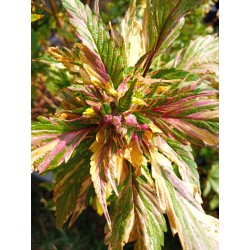
A traditional horticulture company recognized the unique value of our colorful mutations and the potential of cannabis as an ornamental plant. Together, we reviewed every seed line, removed the weak genetics, and preserved only the strongest:
high-yielding, aromatic, potent, mildew-resistant plants with superior tolerance to pests and environmental stress.
Because at Kalyseeds we believe: “Only the strong belong in the garden.”
? What Defines Us Today
✨ Always one step ahead – our motto and our breeding philosophy
? Chimera genetics & rare mutations – researched, documented, and continuously improved
? Open Source Botanic Project – sharing knowledge to push the boundaries of plant science
? 20+ years of outdoor-tested resilience – genetics built for real weather, not lab conditions
? Unique ornamental phenotypes – colorful expressions for garden lovers and collectors
? Personal service – every order is packed by me, with carefully chosen bonus seeds
Our team has grown stronger:
- Darían, now 18, manages shipping, packaging, and social media
- Jaime, our Spanish friend and former longtime customer, oversees management
- André, my son, supports and leads essential organizational work
- And I — Mani “Kaly” — continue the heart of the project: breeding, seed selection, and direct customer contact
? To Our Loyal Customers
Without you, Kalyseeds would no longer exist.
Your trust carried us through dark years and gave this project a second life.
Now, in 2025, stronger and focused, we are ready to show the world what is possible.
Welcome back to Kalyseeds — where every seed has a story, and the future grows one step ahead.
Follow us on Instagram
Cannabis-like & highly potent hop variants (Humulus)
Eastern Himalaya: Arunachal Pradesh ↔ Tibet ↔ Yunnan
This focuses on wild and marginal Humulus types (not brewing cultivars) that show strong cannabis-like morphology and chemistry and were historically confusing in herbaria and ethnomedicine.
1) Why hops become “cannabis-like” here
The Eastern Himalaya is a stress and contact zone:
steep altitude & UV gradients
short growing seasons
frequent disturbance (grazing, landslides)
hybridization & polyploidy hotspots
➡️ Humulus responds with amplified resin, gland density, and leaf plasticity—the same traits typically associated with Cannabis.
2) Morphological cannabis-likeness in wild Humulus
Leaves
Aceriform (maple/hand-like) rather than simple 3-lobed
Broad, rounded lobes, often asymmetrical
Strong bullation (puckered, padded surface)
High variability even on the same plant
Habit
Frequently semi-erect, less strictly twining
Thicker, more herbaceous shoots
Cannabis-like look in juvenile stages
➡️ Historically labeled as “Humulus aff.”, “cannabis-like hop”, or “aberrant Humulus”.
3) Resin & glands — the key to potency
Glandular trichomes occur beyond flowers:
on leaves
petioles
young stems
Early (vegetative) activity, not only at flowering
? Botanically unusual for hops
? Medically significant
4) Functional chemical proximity (without cannabinoids)
Wild Himalayan hops can feel “cannabis-like” without cannabinoids due to synergy:
Compound class
Wild Himalayan Humulus
Cannabis
Terpenes
high & diverse
high
Bitter acids / phenolics
very strong
moderate–strong
Resin matrix
complex
complex
➡️ Resin + terpenes + phenolics can yield calming, analgesic, anti-inflammatory effects similar in profile (not identity).
5) Ethnomedical use (historically consistent)
Across Arunachal–Tibet–Yunnan these hops were used as medicine, not beer plants:
Topical: wounds, inflammation, parasites
Internal (micro-dosed): fever, pain, agitation
Ritual: fumigation/incense (resin as protection)
? Grouped by effect, often alongside Cannabis—not by taxonomy.
6) Typical herbarium signals of cannabis-like hops
Common label phrases:
“resinous leaves”
“unusual habit”
“cannabis-like foliage”
“Humulus aff. japonicus”
“intermediate characters”
These cluster geographically in the Eastern Himalaya.
7) Position in the transition model
These types sit at the Humulus-near pole of a Cannabis ↔ Humulus transition continuum:
stable enough to be Humulus
chemically and morphologically overexpressed
explains many historical “borderline” specimens
Key takeaway
The most potent hops are not brewing cultivars but wild, stress-adapted Himalayan Humulus.
Their cannabis-like traits are adaptive resin strategies—recognized in medicine, long misunderstood in taxonomy.
If you want, I can go deeper into:
specific japonicus-like vs. lupulus-like wild types
effect profiles (hop medicine vs. cannabis)
historic texts describing hops “like cannabis”
placing your Legítimo lines into this framework**Cannabis-ähnliche & potente Hopfen-Varianten (Humulus)
im Ost-Himalaya (Arunachal ↔ Tibet ↔ Yunnan)**
Hier geht es nicht um Kulturhopfen, sondern um wild- und randständige Humulus-Typen, die morphologisch, chemisch und medizinisch auffällig cannabis-nah sind und historisch immer wieder für Verwirrung sorgten.
1) Warum gerade Hopfen hier „cannabis-ähnlich“ wird
Der Ost-Himalaya ist ein Kontakt- und Stressraum:
starke Höhen- & UV-Gradienten
kurze Vegetationsperioden
Verletzung, Verbiss, Rutschungen
Hybrid- und Polyploidie-Hotspot
➡️ Humulus reagiert darauf mit Überexpression von Harz, Drüsen & Blattplastizität – genau die Merkmale, die man sonst von Cannabis kennt.
2) Morphologische Cannabis-Nähe bei Wild-Humulus
? Blattmerkmale
aceriform (ahorn-/handförmig) statt klassisch 3-lappig
breite, abgerundete Lappen
starke Bullation / Runzelung
hohe Variabilität schon an derselben Pflanze
➡️ In Herbarien häufig als
“Humulus aff.”, “Cannabis-like hop”, “aberrant Humulus” abgelegt.
? Wuchs & Habitus
oft halbaufrecht, weniger streng rankend
dickere, krautigere Triebe
cannabis-ähnlicher Gesamteindruck in Jugendphase
➡️ Genau dieser Habitus führte zu historischen Verwechslungen.
3) Harz & Drüsen – der entscheidende Punkt
? Was diese Hopfen besonders potent macht
Drüsenhaare nicht nur an Blüten, sondern:
auf Blättern
an Blattstielen
am jungen Spross
Drüsen wirken früh (vegetativ), nicht erst zur Blüte
? Botanisch außergewöhnlich für Humulus
? Medizinisch hochrelevant
4) Chemische Nähe zu Cannabis (funktional)
Ohne Analytik-Details, aber aus Ethnomedizin & moderner Chemie bekannt:
Wild-Humulus (Ost-Himalaya)
Wirkstoffklasse
Cannabis
Terpene
hoch & variabel
hoch
Bitterstoffe
sehr stark
moderat
Phenole
ausgeprägt
ausgeprägt
Harzmatrix
komplex
komplex
➡️ Keine Cannabinoide nötig, um cannabis-ähnliche Wirkung zu erzielen
➡️ Wirkung entsteht aus Harz + Terpen + Phenol-Synergie
5) Ethnomedizinische Nutzung (historisch konsistent)
In Arunachal–Tibet–Yunnan wurden diese Hopfen nicht als Bierpflanze, sondern als Medizin genutzt:
äußerlich:
Wunden, Entzündungen, Parasiten
innerlich (sehr dosiert):
Fieber, Schmerz, Unruhe
rituell:
Räucherungen (Harz = Schutz)
? Sie wurden zusammen mit Cannabis-Typen geführt – nach Wirkung, nicht nach Art.
6) Historische Herbar-Signaturen solcher Typen
Typische Etikett-Wörter bei cannabis-nahen Hopfen:
“resinous leaves”
“unusual habit”
“cannabis-like foliage”
“Humulus aff. japonicus”
“intermediate characters”
➡️ Genau diese Belege häufen sich im Ost-Himalaya.
7) Einordnung im Übergangsmodell
Diese Hopfen-Typen sitzen klar am:
? humulus-nahen Pol
der Übergangssektion zwischen Cannabis ↔ Humulus
stabil genug, um als Humulus zu gelten
aber chemisch & morphologisch „übersteigert“
ideale Erklärung für historische „Grenzformen“
8) Kernaussage (kompakt)
Der potenteste Hopfen der Welt ist nicht der Kulturhopfen,
sondern der wilde, stressadaptierte Humulus des Ost-Himalaya.
Seine Cannabis-Nähe ist keine Anomalie, sondern eine adaptive Harzstrategie –
medizinisch erkannt, taxonomisch lange missverstanden.
Wenn du willst, gehen wir als Nächstes gezielt weiter mit: